 English
 Polski
 Čeština
 Magyar
 Nederlands
 Deutsch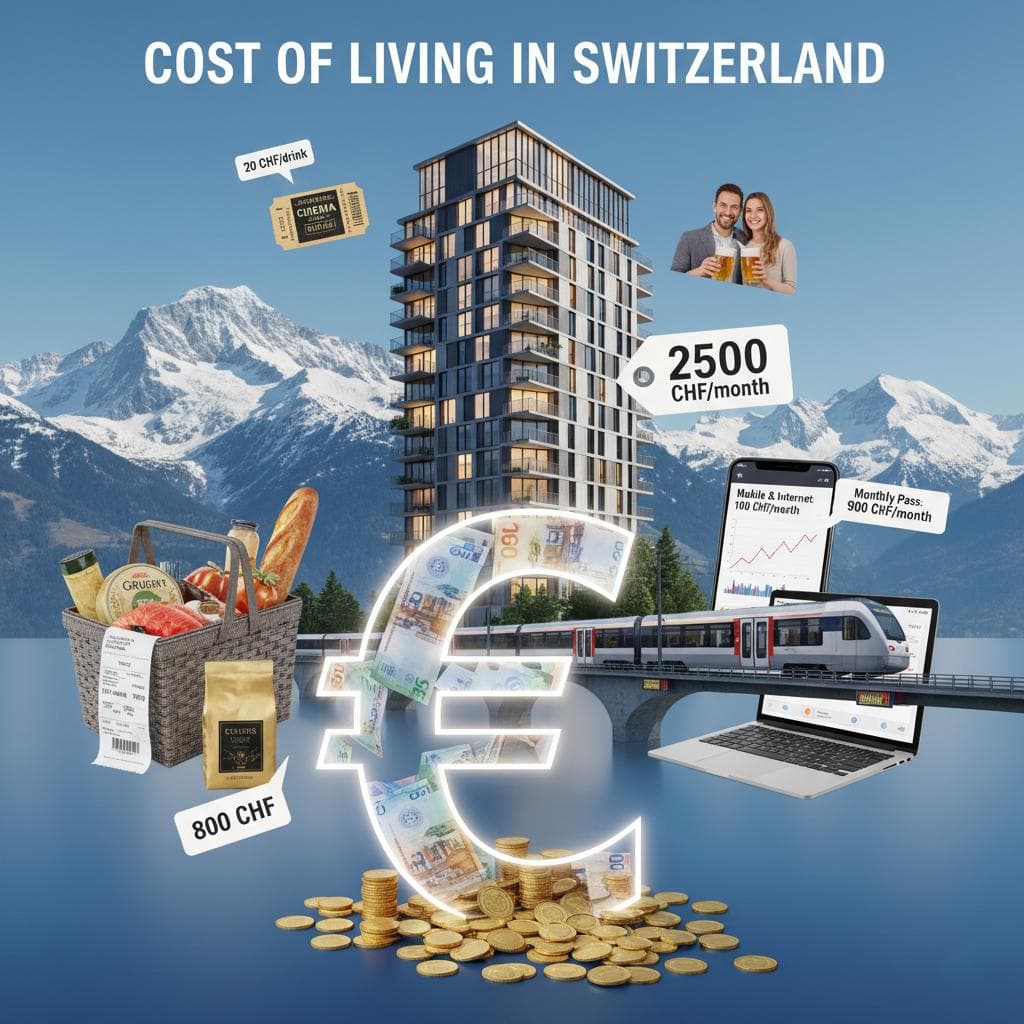

As a physiotherapist in Switzerland you earn on average CHF 6,900 (€7,830) gross per month, with starters around CHF 5,700 (€6,480). That's substantially more than in most of Europe. Living in Switzerland is more expensive too, but certainly not twice as expensive. Here's what it actually costs.
In short: all costs at a glance
A complete overview of average monthly costs for a physiotherapist in Switzerland, plus what you earn:
| Cost item | Amount per month (CHF) |
|---|---|
| Income (net, starter) | CHF 4,900 |
| Housing (1-room, outside city centre) | CHF 1,300 - 1,650 |
| Health insurance | CHF 250 - 450 |
| Groceries | CHF 400 - 600 |
| Public transport | CHF 80 - 190 |
| Phone & internet | CHF 80 - 100 |
| Utilities (gas, water, electricity) | CHF 100 - 150 |
| Leisure & going out | CHF 200 - 400 |
| Total expenses | CHF 2,510 - 3,540 |
| What you have left | CHF 1,360 - 2,390 |
Cost of living in Switzerland vs the rest of Europe
First, some context. Switzerland has the highest cost of living in Europe, with prices averaging around 67.6% higher than in Germany. Look at the salaries though:
Starting salaries for physiotherapists in Europe (gross per month)
- Central Europe (NL, BE, DE): €2,100 - €3,200
- Southern Europe (FR, IT, ES): €1,800 - €2,500
- Switzerland: CHF 5,700 (€6,480)
So in Switzerland you earn at least twice as much as in most European countries. Combined with lower taxes, you have considerably more left over at the end of the month.
Taking the full picture into account, even capital cities with similar rent levels to Zurich rarely let physios save significantly. Paris, Brussels and Munich all have hefty rent bills combined with lower salaries. In Switzerland, you can realistically save CHF 1,500-2,000 (€1,700-€2,270) per month, a very different story.
1. Housing: your biggest expense
In major cities like Zurich you'll pay an average of CHF 1,650 (€1,875) per month for a 1-bedroom apartment in the centre, and around CHF 1,300 (€1,476) outside the centre. Bern and Lucerne sit in between.
Sample rental prices
| Type of housing | Average rental price per month |
|---|---|
| 1-room apartment (city centre, large city) | CHF 1,650 (€1,875) |
| 1-room apartment (outside city centre) | CHF 1,300 (€1,476) |
| 2-3 room apartment (city) | CHF 2,500-3,500 (€2,840-3,980) |
| Terraced or detached house (rural) | CHF 2,000-3,000 (€2,270-3,410) |
Outside the big cities? A village or smaller town easily saves you €500 to €800 per month. Thanks to excellent public transport, you still get anywhere quickly.
Smart tips
- Start in a shared apartment. It saves CHF 500-800 per month quickly.
- Note: a deposit of three months' rent is standard for most rental contracts.
Want to dig deeper into housing? Read our full article on the cost of housing in Switzerland.
2. Groceries: pricey but good quality
For one person you'll pay around CHF 450 (€510) per month on groceries. That sounds like a lot, but the quality is excellent. Swiss products are among the best you'll find anywhere: from world-famous chocolate to fresh mountain cheese.
Where to shop
The two biggest supermarkets are Migros and Coop, with Coop around 10% pricier than Migros. Want to save more? Discount chains like Aldi and Lidl are typically another 10-25% cheaper on top.
Sample grocery prices
- Milk (1 litre): CHF 1.84
- Eggs (12 pieces): CHF 8.00
- Chicken (500g): CHF 12.00
- Bread: CHF 3.50 - 5.00
- Takeaway meal: CHF 13 - 15
Our savings tips
- Choose M-Budget (Migros) or Prix Garantie (Coop) lines.
- Shop seasonal fruit and vegetables.
- Cook at home and bring your own lunch to work. That alone saves CHF 300-400 per month.
3. Public transport: expensive but excellent
Swiss public transport is world-renowned for reliability. The country has over 5,300 kilometres of railway lines, and trains run to the minute.
What public transport costs
- Half Fare Card: CHF 190 (€216) per year. Gives a 50% discount on all public transport, including boats, gondolas and mountain trains.
- GA Travelcard 2nd class: CHF 3,995 (€4,540) per year for unlimited travel.
- Monthly GA: CHF 340 (€386) per month for unlimited travel.
- Monthly regional subscription: CHF 70-100.
For most physiotherapists who don't commute long distances every day, a Half Fare Card or regional subscription is the best option. Budget around CHF 80-120 per month for public transport.
Good to know: For travellers under 25, a Night GA Travelcard costs just CHF 99 per year, valid between 7pm and 5am.
4. Health insurance: pricey but world-class
Everyone living in Switzerland must take out health insurance within three months of arrival. It's one of your biggest fixed costs. What you get in return: healthcare that consistently ranks among the best in the world, something you'll notice when you start working in a Swiss clinic.
How much does health insurance cost?
The average adult premium in 2025 is CHF 449.20 (€510) per month. But there are big differences between insurers and regions. Comparing smartly can save hundreds of francs per year. Through our partnerships with CSS and AXA, we help you find the right fit.
How it works
- You choose a deductible (franchise) between CHF 300 and CHF 2,500. Higher deductible means lower premium.
- You also pay a 10% co-payment on care, capped at CHF 700 per year.
- Basic insurance covers all essential care.
- Supplementary insurance is optional and covers extras like dental, private rooms or alternative therapies.
Smart savings tips
- Choose a higher deductible if you're generally healthy.
- Compare premiums every year. You can switch annually.
- Pick a GP or telemedicine model for lower premiums.
Want the full story? Read our article on health insurance for physiotherapists in Switzerland.
5. Leisure and going out
Switzerland is a paradise for outdoor people. A full day out does come with a price tag.
Sample prices
- Beer in a café: CHF 6-8
- 3-course restaurant menu: CHF 60-90
- Skiing day ticket: CHF 70-90
- Movie ticket: CHF 18-22
Don't forget: hiking, swimming in the lakes and cycling are often completely free or very cheap. Some of the best weekends cost nothing but a train ticket.
6. Other monthly costs
Phone and internet: CHF 50-80 per month
- Mobile plan: from CHF 30
- Home internet: CHF 50-60
Utilities: CHF 100-150 per month
- Gas, water, electricity
- Often already included in your rent
Clothing and personal care: CHF 100-200 per month
- Clothing is slightly pricier than in most of Europe.
- Haircut: CHF 30-80
Price differences by region
Costs vary considerably by canton. Zurich and Geneva are the most expensive, while smaller cantons like Uri and Glarus are far more affordable. Keep in mind: you usually earn more in the expensive cities too, so the balance often evens out. Even within one supermarket chain, prices can differ by up to 20% between regions.
takeoff tips to save money
- Share your home. Saves an extra CHF 500-800 per month.
- Shop at Migros, Aldi or Lidl instead of Coop.
- Get a Half Fare Card for 50% off public transport.
- Compare health insurance every year.
- Use the free outdoor activities and tips from our takeoff community.
Your takeoff to Switzerland
Yes, living in Switzerland is more expensive than in most of Europe. But when you look at the full picture, higher salary, lower taxes, great lifestyle, and what you can actually save, it's a strong choice for ambitious physiotherapists.
At takeoff we've already helped more than 70 physiotherapists move to Switzerland. We know exactly what you'll run into, and how to make the practical side easier.
Ready to start your adventure?
We'll help you with:
- Finding the job that fits
- Applying for SRK recognition
- Finding your new home
- All the practical things about your move
See how we help and take the first step today. With the right guidance, your Swiss adventure is far more affordable than you'd think.