 English
 Polski
 Čeština
 Magyar
 Nederlands
 Deutsch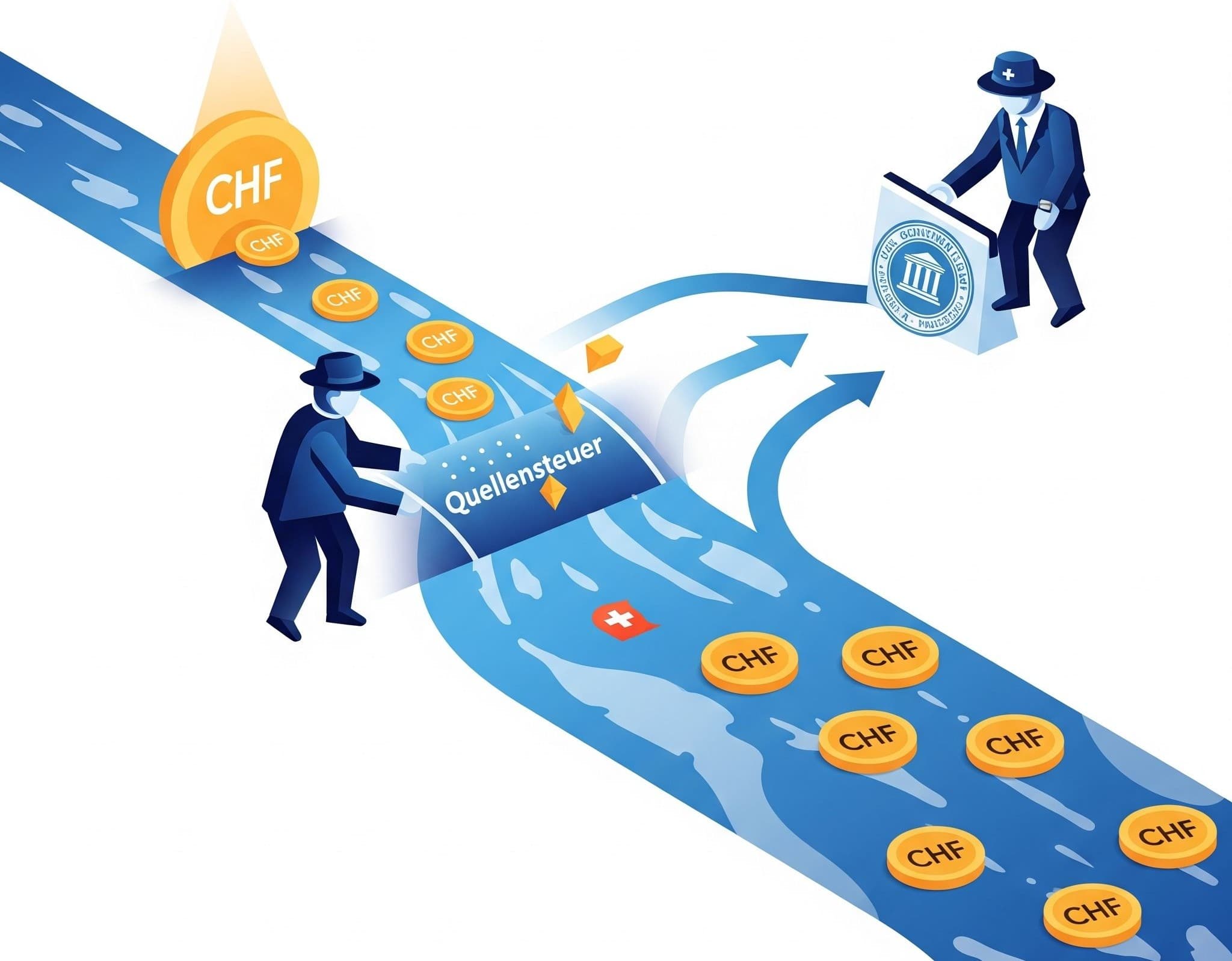

As a physiotherapist working in Switzerland, you'll almost certainly run into the withholding tax, or Quellensteuer. It sounds complicated, but once you understand how it works it's actually pretty simple. Here's everything you need to know.
What is withholding tax, exactly?
Withholding tax is a tax that's deducted directly from your salary before it lands in your account. Your employer automatically withholds it and pays it over to the tax authorities. The system was designed so that foreign employees pay their Swiss taxes without having to worry about it themselves.
As an EU citizen working in Switzerland, you're almost always subject to Quellensteuer. That applies to physios from the Netherlands, Belgium, Germany, France, Italy and every other EU country, as long as you don't have a permanent residence permit yet.
Exceptions
- You hold an Ausweis C (settlement permit).
- You're married to someone who is a Swiss citizen or holds an Ausweis C.
How much Quellensteuer do you pay?
The amount you pay depends on three things: the canton where you work, your family situation and your income. Zurich has different rates than Bern or Basel, and your personal circumstances decide which bracket applies.
The main rate categories
- Rate A: Single, no children.
- Rate B: Married, partner not working.
- Rate C: Married, both partners working.
- Rate H: Single with children.
Special rates often apply to cross-border commuters from EU countries. German commuters, for example, pay 4.5% of their gross salary, while French commuters can fall under different arrangements thanks to bilateral treaties.
To give you a ballpark: as a single physio in Zurich earning CHF 7,000 per month, you'd pay roughly 12–15% in withholding tax, or about CHF 850–1,050 per month. That sounds like a lot, but remember this is your total tax bill. No extra layers of tax on top.
Automatic tax assessment for high incomes
Earning more than CHF 120,000 gross per year? Then you automatically get a Swiss tax assessment, the so-called nachträgliche ordentliche Veranlagung. It happens automatically, you don't have to request it.
The assessment calculates exactly how much tax you owe and compares that to what you've already paid via withholding tax. For most physios this means a refund, because you usually pay slightly more through Quellensteuer than strictly necessary.
Getting a refund as a lower earner
Even if you earn less than CHF 120,000, you can always file a voluntary tax return. That can be very worthwhile, especially as a physiotherapist, because you can deduct a lot of professional expenses.
Key deductions for physiotherapists
- Courses and continuing education.
- Professional literature and journals.
- Travel costs to conferences.
- Specific work clothing.
- Pension contributions (2nd pillar).
- Deposits into Pillar 3a (maximum CHF 7,258 in 2025).
- Significant medical costs not covered by insurance.
The nice thing about the Swiss system is that many expenses that are barely deductible elsewhere do count here. A lot of physios underestimate how much they actually spend on their professional development.
Crucial deadline: your application has to be in by 31 March of the year following the tax year. Miss that date and you can't file anymore. This rule is enforced strictly.
Tips for your tax return
- Keep all your receipts for work-related expenses throughout the year. A simple folder or digital app can earn you hundreds of francs. Many EU physios forget things like professional association fees or subscriptions to industry journals.
- Pension purchases can be a smart move. If you have room in your second pillar (you'll see it on your annual pension statement), you can top up and deduct the full amount from your taxes. Ask your employer about your current pension situation.
- Check your pay slip regularly to make sure the correct rate is being applied. Married but taxed as single? You're paying too much, and it needs to be corrected.
When your situation changes
If your personal situation changes, it may affect your withholding tax. Always report these changes to your employer right away:
- Getting married or divorced.
- Having children.
- A partner who starts or stops working.
- Receiving an Ausweis C.
Changes usually take effect from the first day of the month after the change is reported. The sooner you pass it on, the more you can save.
If you move back to your home country
When you decide to move back to your home country, you may be able to get a refund from your Swiss pension fund. Both your second pillar and Pillar 3a can come back to you under certain conditions. This involves some paperwork that needs to be verified by the tax authorities in your home country, so take your time and get help from a tax advisor in the country you're moving to.
Getting help with your tax return
For simple questions, you can contact the cantonal tax authorities. They help free of charge and usually have English-speaking staff. For a full tax return though, it's smart to get professional help.
Specialist tax advisors with experience serving EU citizens in Switzerland can help you find every possible deduction. Many physios discover they can recover hundreds, sometimes thousands of francs per year via a professional return. Taxea.ch, our tax partner at takeoff, specialises in supporting foreign professionals.
The main thing to remember is that the Swiss withholding tax system is there to make life easier for you. You pay your taxes automatically, and with the right guidance you can often get a decent amount back.