 English
 Polski
 Čeština
 Magyar
 Nederlands
 Deutsch

Swiss physio salaries look impressive on paper, but how much actually lands in your bank account? The tax system here works differently from most of Europe, and your canton makes a real difference. Here's the full gross-to-net breakdown.
How the Swiss tax system works
The Swiss system is straightforward once you understand it. Two things come out of your gross salary:
1. Social contributions (around 13.5% of gross salary)
- Pension (AHV/IV): 5.3%
- Unemployment insurance (ALV): 1.1%
- Company pension savings (BVG): 7% (up to age 35)
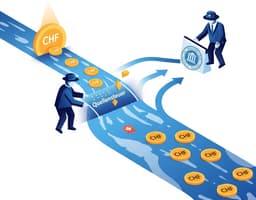
2. Quellensteuer (3-12% of gross salary, depending on canton)
As a new physiotherapist, you pay Quellensteuer, a fixed percentage withheld directly from your salary. The percentage depends on:
- Your canton and municipality
- Your age
- Your income bracket
- Your personal situation (married or single, children)
After 5 years you can apply for an Aufenthaltsbewilligung C. From that point on you pay tax like a Swiss resident, via the three-tier system:
- Federal tax: 1-11% (progressive by income)
- Cantonal tax: 0-13% (varies significantly by canton)
- Municipal tax: varies by municipality
The big difference? With a C permit you file an annual tax return and pay afterwards, instead of automatic monthly withholding. For most physios, the overall load stays roughly comparable to Quellensteuer.
From gross to net: a concrete example
Let's look at a starting physio in the canton of Lucerne earning €5,500 gross per month.
Step 1: social contributions
- €5,500 gross salary
- €740 social contributions (13.5%)
- = €4,760 paid out per month
Step 2: Quellensteuer
- Quellensteuer Lucerne: approximately 9% for this income
- €5,500 x 9% = €495 Quellensteuer per month
- Actual net: €4,760 - €495 = €4,265
On top of that you get a 13th month salary paid out each year. That's an extra €5,500 gross, landing closer to €4,265 net once the same deductions apply.
How Switzerland compares to the rest of Europe
How does this stack up against physiotherapy salaries in the rest of Europe? A rough comparison for starting physios:
| Country | Gross monthly | Net monthly |
|---|---|---|
| Central Europe (NL, BE, DE) | €2,100 - €2,500 | €1,500 - €1,900 |
| Southern Europe (ES, IT, PT) | €1,600 - €2,200 | €1,200 - €1,700 |
| Switzerland | €5,500 | €3,960 |
Not only is your gross salary substantially higher in Switzerland, you also keep relatively more of it. In much of Europe, a salary increase pushes you into tax brackets of 35-45%. In Switzerland the effective rate stays around 28%, even as you earn more.
Cantonal differences: location determines your tax rate
Unlike most European countries where income tax is national, Switzerland sets it largely at cantonal level. Quellensteuer rates vary significantly, which has a real impact on what you take home. For €5,500 gross (single):
- Zug: Lowest rate (3.1%) → €4,590 net
- Schwyz: Low rate (5.5%) → €4,460 net
- Lucerne: Average rate (9%) → €4,265 net
- Zurich: Average rate (9.5%) → €4,240 net
- Basel-Stadt: High rate (11%) → €4,155 net
- Geneva: Highest rate (12%) → €4,100 net
The gap between the lowest and highest rates is around €490 per month, nearly €6,000 per year. One thing to factor in: average salaries also vary by canton, so on balance you often earn more gross in a high-tax canton like Zurich or Geneva than in a low-tax one.
Practical tips for your first months
- Your Quellensteuer is withheld automatically, no end-of-year surprises.
- Open a Swiss bank account as soon as you arrive so your salary can be paid in.
- Assume 25-30% total gross deduction when budgeting for your first months.
And saving money is realistic too
The best part about working in Switzerland? Even after the higher cost of living, most physios save between €1,500 and €2,000 per month. That's substantially more than what's realistic in most other European countries.
Ready for takeoff?
Inspired by these numbers? Browse our open vacancies to see what's available, or discover how we guide you from your first application to your first day at work in Switzerland. Ready to give your career and your savings account a serious boost?